
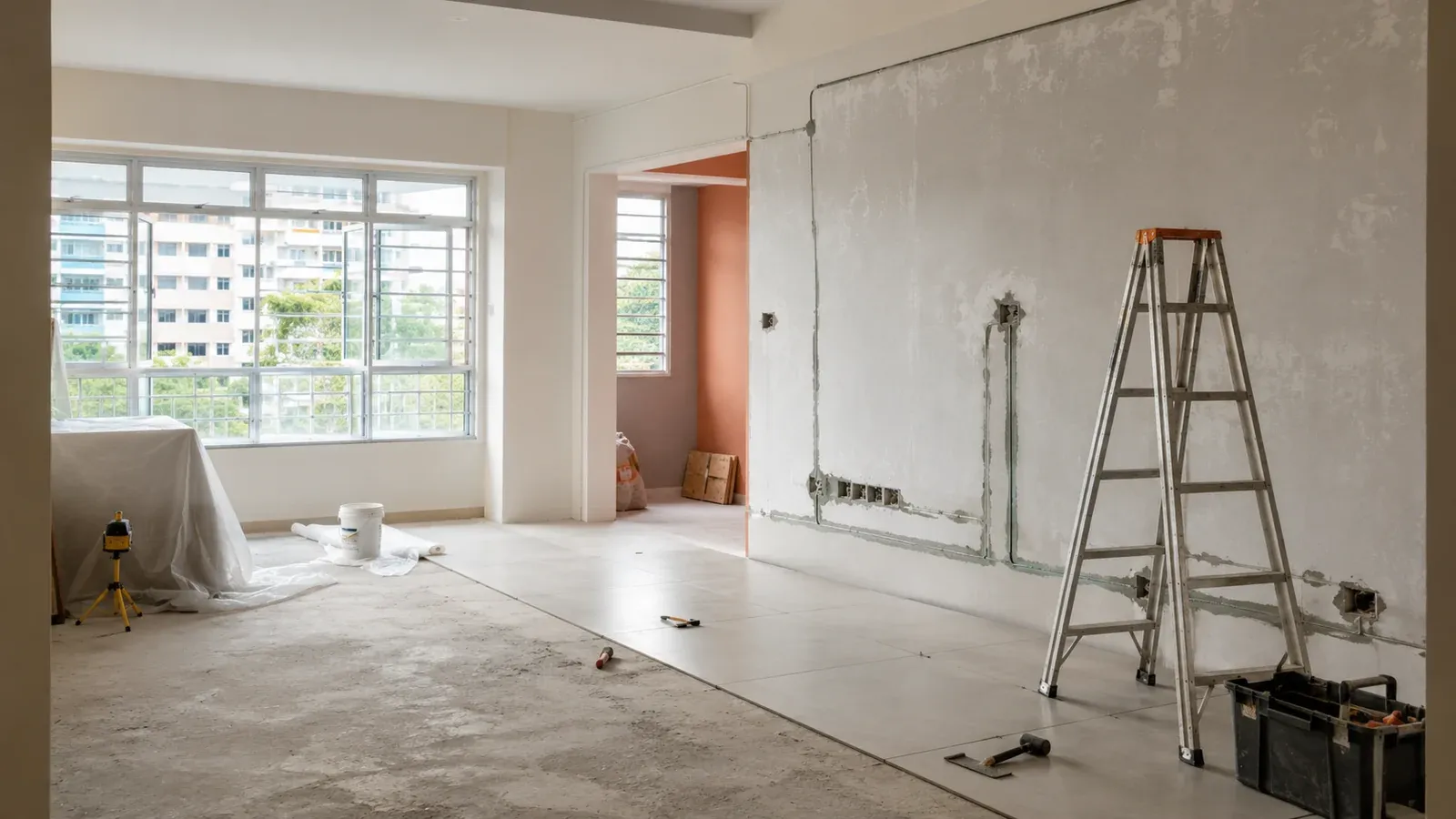
Most renovation advice treats every mistake as equally bad. It is not. A wall colour you regret costs a weekend and a tin of paint to fix. A bathroom that was waterproofed badly costs you the whole bathroom again, plus the ceiling of the neighbour below you.
The mistakes worth losing sleep over are the ones you cannot undo, or can only undo at a painful cost. In Singapore, those are usually decided quietly in the first few weeks of works, long before the renovation looks finished. This guide sorts the common mistakes by how hard they are to reverse, so you spend your attention and your budget where it actually matters.
Home Reno Pte Ltd handles HDB, BTO, condo, and landed renovation in Singapore with transparent pricing, no GST, and no hidden costs. We are a CaseTrust and RCMA accredited team, and a large part of our job is talking homeowners out of the decisions they would not be able to take back.
Quick Answer: Which Renovation Mistakes Can’t Be Undone?
The renovation decisions that lock you in are the ones buried inside walls, floors, and wet areas, plus anything that touches structure or approvals:
- Poor waterproofing and wet works in bathrooms and kitchens
- Hacking or structural changes done without approval
- Tiling and flooring, especially under the new BTO no-hacking rule
- Concealed electrical and plumbing routing, and too few power points
- A layout or built-in carpentry plan that fights how you actually live
- Engaging a contractor who takes your deposit and disappears
Everything else, paint, loose furniture, light fixtures, cabinet handles, decor, can be changed later for a fraction of the cost. The skill is not avoiding all mistakes. It is making sure the mistakes you do make are the cheap, reversible kind.
Why “Can’t Undo” Matters More In 2026
There is a hard reason to get the permanent decisions right the first time: in Singapore, getting your money back when a renovation goes wrong is difficult and often impossible.
In 2024, the Consumer Association of Singapore (CASE) received 962 complaints about renovation contractors, with consumer losses totalling around S$728,000. About 97 percent of those complaints involved firms that were not CaseTrust accredited. The Small Claims Tribunals only hear disputes up to S$20,000, and even when you win, the order is only worth something if the company still has assets. Many simply fold and reopen under a new name.
So the realistic position is this: prevention is your main protection, not recourse. If a permanent part of your renovation is done wrong by a contractor who then vanishes, no tribunal can un-hack your wall or re-waterproof your bathroom for you. You pay to do it twice.
That reality is exactly why the order of decisions below matters.
The Renovation Reversibility Spectrum
Before you approve anything, place each decision on this spectrum. The further left, the more it deserves your time, a second opinion, and your budget.
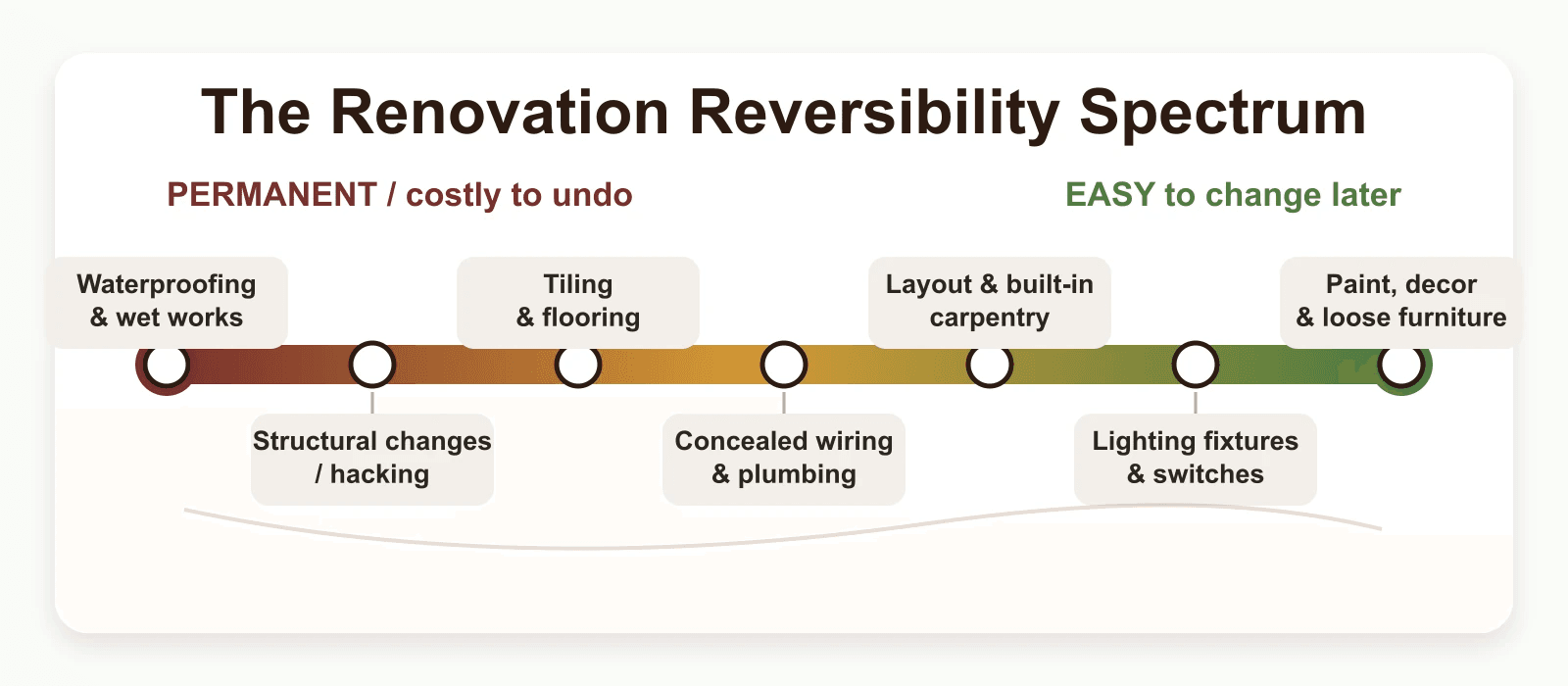
| Decision | How hard to undo | Why |
|---|---|---|
| Waterproofing and wet works | Permanent | Sealed under tiles and screed; redoing means hacking the whole area |
| Structural changes and hacking | Permanent | Cannot be reversed safely or legally without reinstatement and approval |
| Tiling and flooring | Very hard | Hacking is costly and, for new BTO bathrooms, restricted for the first three years |
| Concealed wiring and plumbing | Very hard | Chased into walls and floors; moving a point means cutting them open again |
| Layout and built-in carpentry | Hard | Walls, cabinets, and wardrobes are fixed to the property and sized to the space |
| Lighting fixtures and switches | Moderate | Points are fixed, but fittings can be swapped within the existing wiring |
| Paint, decor, loose furniture | Easy | Changed in a day for a small cost whenever you like |
The Mistakes That Lock You In
Skimping On Waterproofing And Wet Works
This is the single most expensive thing to get wrong, because it is completely hidden until it fails. Waterproofing membrane goes down before tiling, so by the time a leak appears in your bathroom or seeps into the unit below, the only fix is to hack out the finished floor and walls and start the wet works again.
A cheaper bathroom quote often looks cheaper because it trims exactly here: thinner or skipped membrane, no proper screed-to-fall, rushed curing time. You will not see any of it. You will only find out a year later. If your budget is tight, this is the last place to save. Spend on membrane, falls, floor traps, and pipe condition first, and save on the decorative tiles and fittings instead.
Hacking And Structural Changes Without Approval
In an HDB flat you cannot touch the bomb shelter, structural walls, columns, or certain beams, and most hacking needs an HDB permit and a licensed contractor. Skipping approval does not just risk a fine. It triggers a reinstatement order, which means paying your contractor to rebuild what you removed, to HDB’s specifications.
The numbers make the point. Unauthorised works such as hacking without a permit, demolishing a forbidden wall, or working outside approved hours typically draw fines of up to S$5,000 for a first offence, with mandatory reinstatement that commonly runs S$10,000 to S$30,000 on top. Severe structural breaches under the Building Control Act can reach as high as S$200,000. And these problems resurface at the worst time, during a resale inspection, when they can hold up or sink the sale entirely.
Before any wall comes down, get it confirmed in writing whether it is load-bearing and whether HDB or your condo management has approved the change. Never take a contractor’s casual “this one can hack” at face value.
Tiling And Flooring, Now With A Three-Year Lock
Tiling is hard and expensive to reverse at the best of times, because hacking old tiles damages the screed and waterproofing beneath. From 2026 there is an added catch for new flats: BTO owners face a three-year restriction on hacking bathroom floor and wall tiles after key collection. If you dislike your bathroom tiles, you may be living with them, or overlaying them, for years.
That changes the maths. For floors you are unsure about, an overlay approach (such as vinyl or overlay tiles over the existing surface) keeps your options open and avoids touching the waterproofing. For tiles you are committing to permanently, choose a finish you can live with for a decade, not the one that happens to be trending this year.
Concealed Wiring, Plumbing, And Too Few Power Points
Electrical and plumbing routes are chased into walls and floors and then sealed over. Moving a single socket or a water point afterwards means cutting the wall open, re-chasing, patching, and repainting. This is why “we will just add it later” is rarely cheap and never clean.
The most common version of this regret is too few power points, in the wrong places. People discover after move-in that there is no socket beside the bed for a charger, nothing at counter height for kitchen appliances, and no provision for the things they will own in three years. Plan more outlets than you think you need, at the heights you will actually use them, while the walls are still open. For how to layer this with your lighting plan, see our guide on the importance of lighting in your living room.
A Layout That Fights How You Live
A renderer can make any layout look beautiful. Living in it is different. Once walls, wet areas, and built-in carpentry are fixed to the property, the layout is effectively permanent, and a plan that ignores your daily routine becomes a daily irritation.
This is also where communication breaks down most often. In one 2026 survey, two in three renovation regrets traced back to communication gaps between homeowner and contractor, the layout looked right on the drawing but wrong in the home. Before you sign off, walk your own routine through the plan out loud: where the groceries land, where wet umbrellas go, how two people pass in the kitchen, where you will actually work from home. An open-concept kitchen looks generous until cooking smells fill the whole flat.
Built-In Carpentry Sized For The Render, Not The Room
Carpentry is bolted to your walls and cut to your dimensions, so a sizing mistake is not a return, it is a rebuild. The usual errors are cabinets too shallow to be useful, top cabinets too high to reach without a stool, deep corners that swallow everything, and no ventilation in storage that then grows mould in our humidity. Go full-height where you can, keep daily-use items within reach, design pull-outs for anything deep, and ventilate enclosed storage. Decide this before fabrication, because afterwards there is no adjustment, only replacement.
The Mistakes That Feel Urgent But Aren’t
Here is the freeing part. A lot of what couples argue over during renovation is fully reversible, which means it does not deserve to drain your budget or your patience:
- Paint colour changes in a weekend
- Light fittings swap out within the existing wiring
- Cabinet handles and tapware unscrew and replace
- Loose furniture, rugs, curtains, and decor can be bought over time as cash allows
- Smart-home gadgets can almost always be added later
If money is tight, take it from this list, not from waterproofing or electrical. A practical move is to lock down the permanent, hidden works to a proper standard, then deliberately under-spend on the surface layer and upgrade it gradually after move-in. The home still ends up where you want it, without a stressful overspend during the build.
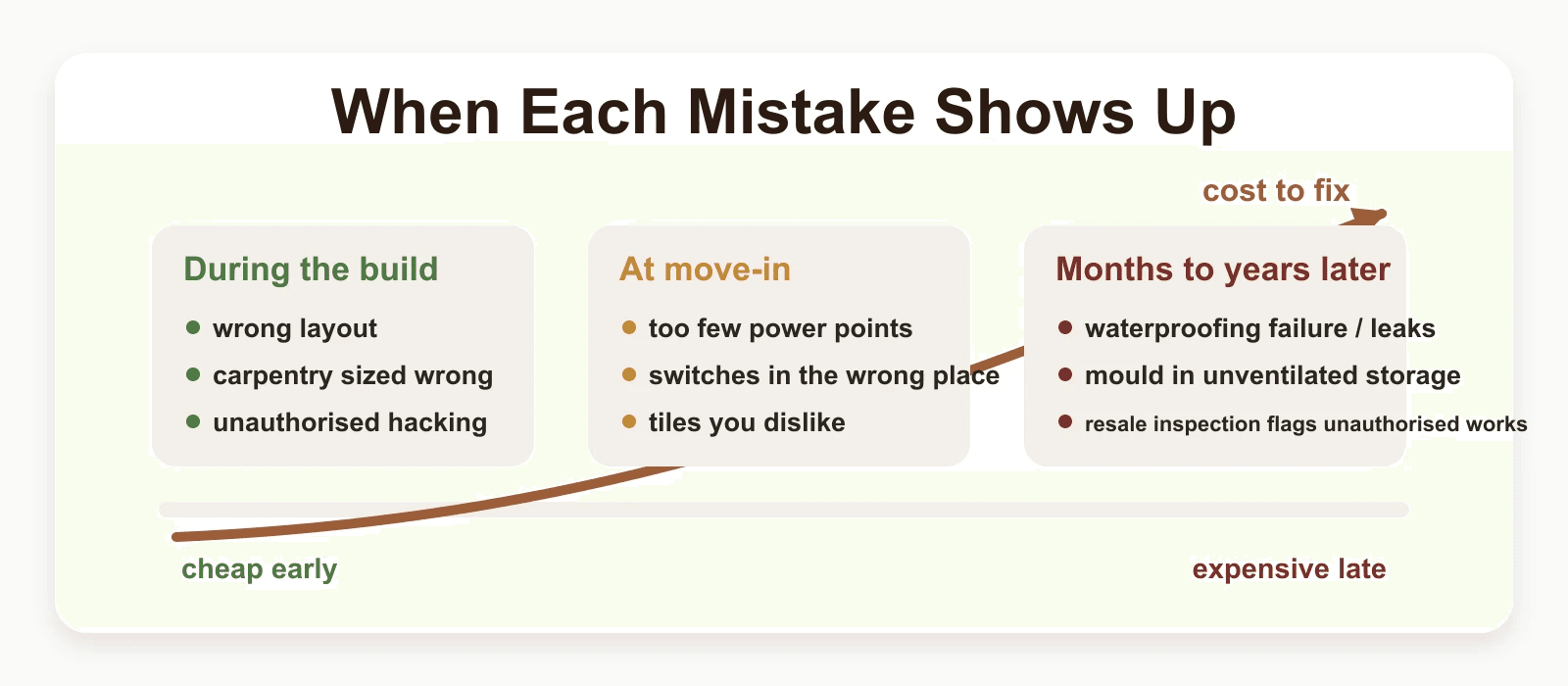
The Hardest Mistake To Undo: The Wrong Contractor
Every permanent decision above is only as good as the person executing it. Hidden works are precisely where a bad contractor cuts corners, because you cannot see it and, as the 2024 CASE figures show, you may never get your money back. Choosing on the lowest quote alone is how most homeowners end up there.
We have written this up in detail rather than repeat it here:
- For vetting, deposit limits, and a 20-point checklist, read home renovation scams: what you must know.
- For cost ranges, quote comparison, and the 20 percent buffer, read the renovation budget planning guide 2026.
The short version: get three to five itemised quotes, be suspicious of anything far below the rest, insist on a CaseTrust or RCMA accredited firm, confirm the CaseTrust initial deposit is no more than 20 percent, and pay progressively against completed work, never in full upfront.
How Home Reno Helps You Avoid The Permanent Mistakes
Our job is to get the hidden, irreversible works right the first time, because those are the ones that cannot be quoted away later. That means proper waterproofing and wet works, approvals handled correctly, honest advice on what can and cannot be hacked, and electrical and carpentry planned around how you actually live, not just how the render looks.
You work directly with our team, with transparent pricing where every cost is itemised upfront, no GST, and no surprise fees mid-project. When you are ready, start from our renovation packages or request an itemised quote, and we will walk through which of your decisions are permanent before you commit to any of them.
Frequently Asked Questions
Which renovation mistakes are impossible to fix later?
The hardest to reverse are poor waterproofing, unauthorised hacking or structural changes, tiling and flooring, and concealed wiring and plumbing. These are sealed inside walls and floors or tied to approvals, so correcting them means hacking, re-doing the work, and in some cases paying reinstatement costs. Decisions like paint, fittings, and furniture are easily changed and should not absorb your stress or budget.
Can I change my HDB or BTO bathroom tiles after renovation?
It is difficult and, for new BTO flats from 2026, restricted. BTO owners face a three-year no-hacking rule on bathroom floor and wall tiles after key collection, because hacking risks damaging the waterproofing membrane. If you are unsure about a finish, an overlay approach avoids touching the waterproofing and keeps your options open. Otherwise, choose tiles you are happy to keep for many years.
What happens if I hack an HDB wall without approval?
You risk a fine of up to S$5,000 for a first offence, a mandatory reinstatement order to rebuild what was removed (commonly S$10,000 to S$30,000), and a possible stop-work order that delays your move-in. Severe structural breaches can carry far higher penalties. Unauthorised works also surface during resale inspections and can hold up or derail the sale. Always confirm in writing whether a wall is structural and approved before hacking.
Is it worth paying more for waterproofing?
Yes. Waterproofing is hidden under tiles and screed, so a failure is only discovered after a leak appears, by which time the only fix is to hack out and redo the entire wet area, sometimes including a neighbour’s ceiling. It is the last place to cut cost. Spend on membrane, proper falls, floor traps, and pipe condition first, and save on decorative tiles and fittings instead.
How do I get my money back if my contractor does not finish?
Often you cannot recover much. The Small Claims Tribunals only hear disputes up to S$20,000, and an order is only useful if the firm still has assets, many simply close and reopen under a new name. In 2024, CASE logged 962 renovation complaints with around S$728,000 in losses, 97 percent involving non-accredited firms. The practical protection is prevention: use an accredited firm, limit your deposit, and pay progressively against completed work.
Which renovation decisions can I safely delay?
Anything on the surface: paint colour, light fittings, cabinet handles, tapware, loose furniture, curtains, rugs, decor, and most smart-home devices. These can be changed or added after move-in for a small cost. Lock down the permanent, hidden works to a proper standard during the build, then upgrade the surface layer gradually. This keeps the irreversible parts right while easing your cash flow.